Body Kinetics Therapy
  • Home
  • About
  • Clinics
    • Hammersmith & Fulham W6
    • Hackney E5
  • Training
  • Contact

Bowen for Foot and Knee Pain

3/2/2018

0 Comments

 
James is an engineer in his 30s who came to me primarily because of pain he was getting in his left foot and knee. It would hurt to walk from the first steps he took in the morning and he would have to put his feet up to rest “like an old man” by about 8pm every day. He also had a constant ache in his back when he was sitting and would get a pain in his left shoulder blade when taking in a deep breath. ​
Picture
The back and shoulder pain disappeared after the first session, and have rarely bothered him for 15 months. After the second session he told me he ached like he´d been lifting weights (this response is quite common and always surprises people), but he was experiencing less pain in his foot and knee at the end of the day. He also hadn´t needed to sit down at all in the evening, though a long day on site left him slightly limping. His back was fine despite moving house in the preceding week. 

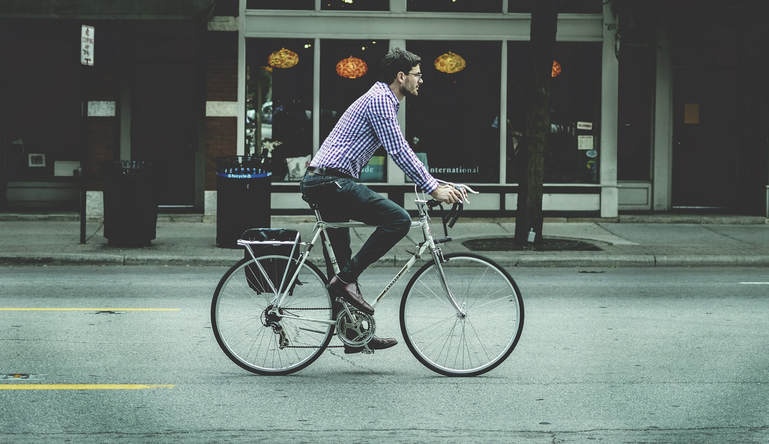
Over the next 2-3 sessions the pain in his left leg gradually decreased, with occasional days when he needed to rest it in the evening, but he was generally less and less aware of it. With the occasional setback, his leg has steadily improved and his sessions are less frequent. The problem has been so much better that he started cycling again. I see him every 8 weeks or so for maintenance. 

“James used to be sad and now he´s happy.”  James´ wife. ​
"Having originally injured my back a number of years ago I had tried almost every type of treatment on the market. The pain had moved into my knee and leg and I was worried about my ability to play with my kids as they got older. I was recommended Bowen by my Pilates instructor, but I had no expectations.

​Following the first treatment I was still sceptical until I woke up the next morning and felt like I had completed a hard workout. Much to my surprise this continued for the next 2-3 sessions. The gentle treatment appeared to have a big impact on my body. The pain has gradually decreased over time and isn’t comparable to when I first started Bowen. 
​

Bowen has made a huge difference to my life. I didn’t realise how much the knee and foot pain was impacting on my well-being. I can go for long walks with my family and play with my kids without being restricted by the pain. I have and will continue to recommend Bowen to anyone experiencing pain.”
0 Comments

​What’s the Difference Between Bowen, Osteopathy, Physiotherapy and Chiropractic?

2/25/2018

0 Comments

 
Anyone who practices Bowen has to get used people asking what on earth Bowen is as it is far from being as well known in the UK. This first answer often leads to a second layer of questions, which boil down to what the difference between Bowen, osteopathy, physiotherapy and chiropractic is.  
 
There are two things to flag before answering: first, the work of excellent therapists working with the body from all backgrounds can look and especially sound quite similar. This is because (second caveat) it is ultimately the skill of the therapist and not the name of their style which matters. Regulation does not (and never will) stop there being good and bad practitioners in every style. ​
What is Physiotherapy? 
 
Growing out of early C20 physical rehabilitation work, physiotherapy is the approach to physical therapy which is historically established within the NHS. Physios thus have exclusive right to call themselves by the title Physiotherapists or Physical Therapists (even though there are many other people doing physical therapy). They typically offer:

  • Wellbeing advice (ergonomics, lifting etc)
  • Tailored corrective exercise 
  • Manual therapy, like massage, ultra sound, acupuncture 
 
Physio treatment encompasses everything from stroke and post-operative rehab to working with sports injuries. Training and style differs from country to country, so someone trained in Australia or Canada may work differently to a British trained therapist. 
 
Summary
Key Idea: Rehabilitative improvement of the mechanical function of your body. 
Techniques Used: wellbeing advice, corrective exercise, manual therapy (massage, ultra sound etc)
Session Length: first session 30- 60 minutes, ongoing shorter (often 30 minutes). 
​​
Picture
What is Osteopathy?
 
The first osteopathic training centre opened in 1892 and the approach is based on the idea that correct muscular-skeletal structure will promote optimal health. Since 1993 osteopathy has been regulated and can be available on the NHS.
 
The original philosophy of osteopathy is to give structural corrections, specifically of bone and soft tissue, using a wide variety of manual techniques so that the blood can circulate unhindered. Osteopathy has been evolving over its 120 year history, and many osteopaths now use corrective exercise and have adopted an understanding of their work which can be quite hard to distinguish from a physiotherapist. ​

Summary
Key Idea: correction of physical structure leads to better blood circulation and better overall health. 
Techniques Used: many different types of manual therapy (including soft tissue and sometimes velocity manipulations or “crunches”), advice, sometimes corrective exercise. 
Session Length: Longer initial appointment then often 30-45 mins ongoing. 
​
What is Chiropractic?
 
Growing out of the ancient practice of “bone setting”, modern chiropractic started in the 1890s. Chiropractors (“hand workers”) work with the joints between bones, especially spinal joints, with the goal of improving health through freeing the nervous system. It is most known for spinal adjustments of “subluxations” (bones which are a little bit out of position) to upgrade the innervation (nerve connection and function) of the body by the spinal nerves. 
 
Summary
Key Idea: Spinal health leads to free communication in the nervous system and therefore better overall health. 
Techniques Used: velocity manipulations (“crunches”) sometimes with soft tissue work. 
Session Length: Longer initial appointment then 15-20 minutes ongoing.
Picture
What is Bowen?
 
Tom Bowen saw himself as part of the osteopathic tradition, and the philosophy behind his work is similar to both classic osteopathy and chiropractic. What is very different is how he worked to get his results. 
 
The mechanism of Bowen is probably neurological, using brief corrections followed by periods of rest. To the best of our understanding these movements, and the breaks which follow them, effect the nervous system through the superficial touch receptors in the connective tissue under the skin. 
 
Summary 
Key Idea: Neurological stimulation leading to muscular-skeletal, proprioceptive or endocrinal change. 
Techniques Used: joint mobilisation, the Bowen Move, holding points. 
Average Session Length: Initial and ongoing sessions 30-60 minutes (depending on several factors).
0 Comments

Bowen and Post Stroke Recovery

2/13/2018

0 Comments

 
​Phil experienced two strokes on New Years´ Day 2006 and was in the stroke unit for several months, having lost speech, movement and a lot of sight in this left eye. He’d had a high achieving job in advertising and brought the same drive to his rehab, ignoring anyone who told him that he would never be able to do “X”. He’d completed a marathon a few years previously and felt that, physically speaking, things were as good as they were going to get. 

We decided to see what Bowen could do with the hope of trying to bring more evenness to the two sides of his body. There was still a definite difference and his movement had some ataxia which included a limp left arm (apart from a sudden movement of his finger at the end of when the swing would have happened) and other things like having having to go down stairs sideways. ​

Picture
The first treatment made him so hot that he sweated and felt “weird”, but when I saw him 5 days later his movement was dramatically smoother, faster, with no movement of his left hand and the arms hanging evenly. He could go down stairs normally and his walking speed had dropped from 14 ½ to 13 ½ minute miles.
​
The next treatment produced a strong neurological reaction which he said felt like an “electrical storm in his legs”. When he came back the week after he´d noticed that his muscles had stopped cramping when he was static for longer periods (eg watching TV for an evening or afternoon). His shoulder no longer felt like it was dislocating and he had stopped getting pain in his upper back, which used to be extremely bad when he moved his hands behind his body. His left shoulder no longer causes him problems and he can put his socks on normally for the first time since 2005. 
​
The fourth time I saw him I worked on his jaw and his sacrum, which led to an immediate shift in his perception of his body with his neck feeling longer and straighter and the whole body feeling more integrated. The day after it felt like he´d been punched in the face, but with a remaining sense of space and length in the body. 
“Having made a significant recovery from two strokes that left my left side weaker than the right, I thought that I had reached the plateau. I was happy with where I was at, having not only become a Pilates teacher, but also completing a marathon. 

It was a friend who mentioned the Bowen Technique and I started to work with James. I really did not know what to expect. After one session I felt very drained, tired and achy, but had not been what I would call manipulated. However, the next day my movement from gait, hips, shoulder, neck changed significantly. I was shocked and, to be honest, surprised as I´ve done a lot in the way of rehab. 
​

I have continued working with James and the changes keep happening. I feel awkward because after having such a huge imbalance between my two sides for so long it feels weird with what is now my new normal. After my sessions my body goes through a metamorphosis, emerging better. Like rebooting a computer I suppose, if I had to sum it up.”
​
We did sessions every 2 weeks for a few months and he is currently taking a break to allow him to adjust to the huge changes in his experience of his body. ​
0 Comments

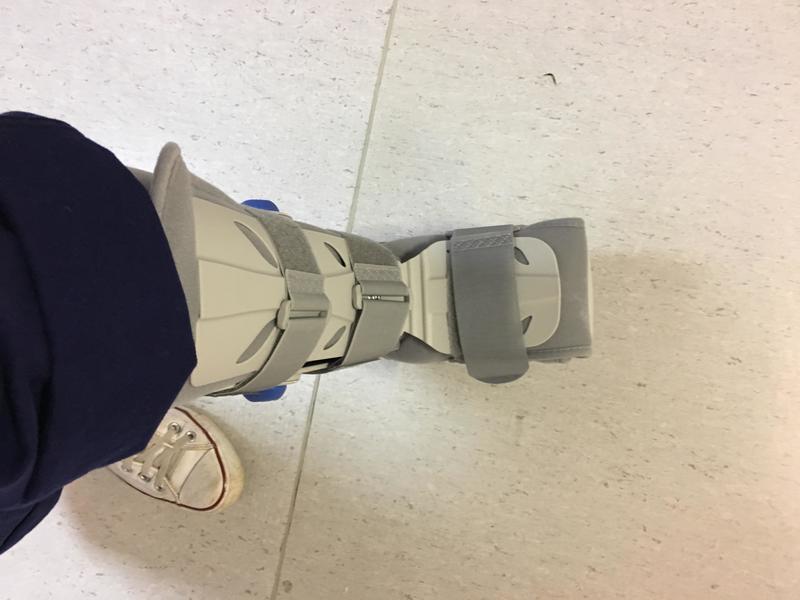
Using Bowen to help Injury Recovery (Broken Foot with Back Pain from the Airboot)

12/11/2017

0 Comments

 
Back Pain from Walking in an Airboot
 
Beth is a photographer who broke her foot in June 2017 and had been in an airboot for 6 weeks when she came to see me, initially asking if I could help with a pain that she got in her finger sometimes when unzipping her camera, and because her shoulders get stiff from work.

Her foot was healing on schedule and felt reasonably ok to her, though it would swell in the evenings. However, her right lower back and glute were in constant pain from the way that the airboot was making her walk. Assessment showed that the bones in her feet were slightly out of position.

I could see from her walking at the end of the session that the lower back was still locked up, so did a release technique on her, which stopped the lower back pain instantly. After the treatment she was very tired and “could have slept for a lifetime”. The pain in her back/glute went for about 5 days and just started returning the day before the second treatment
Picture
Whole Body Compensation After a Broken Foot
 
A few days later she had an appointment with the specialist when the airboot came off. When she came back the second time her calf had been painful and “intensely unpleasant” since removing the airboot: a few days before she had sat for 20 mins for lunch and couldn´t walk afterwards.

I noticed, however, that her body was generally much more relaxed than it had been in the first week. Her shoulders especially felt noticeably less tense. The third week she was feeling good. She´d worked the day before, which had been quite hard on her foot, but had been feeling very focussed after the last session and had been sleeping very deeply.

Her left calf had hardly been painful at all since I worked on it the week before. The pain in the back and bottom had totally gone. She also told me that her restless leg (which she hadn´t even thought to mention in the first session) had almost totally stopped bothering her.

​Her finger pain (the original reason for coming) hasn´t bothered her since she´s been seeing me. Her foot is doing pretty well, and the bone position improved after I did some ankle and foot work. I now see her about every 4-6 weeks, for a “tune up” and to work with shoulder issues which work makes worse for her. 
“Bowen has been a complete revelation for me. I had no idea what it was or how it worked, but was happy to try anything after 6 weeks in an air boot. I had been having massage to release the blockages in my lower back and glute, but it was only a temporary help.
​

Bowen came as a complete surprise as to how released my body became after one treatment. The treatment itself also came as a surprise: it was so un-invasive, and felt gentle and controlled. A slight manipulation of the body which works wonders. It felt like my muscles were being gently rolled.

After the first treatment I literally could have cried because I felt so released from the pains and it lasted which was great. I was also really tired and slept so well and deeply especially during the first week. My second treatment only seemed to improve things further and other noticeable aches and pains that I had generally been living with for years seemed to have lessened considerably. Things such as tight shoulders and stiff neck.

I would highly recommend Bowen and have done to several friends. I like the fact it is not a continuous treatment and things have improved and disappeared altogether after a few treatments. It felt like I was a very tightly knotted ball of string that James patiently yet quickly unravelled into a long, taught piece of string.”
0 Comments

Bowen for Knee Injury (and Menopausal Hot Flushes)

11/2/2017

0 Comments

 
Tracey came to me with a very visibly swollen left knee which she couldn´t straighten after injuring it during exercise. The arch of her left foot was collapsed with the bones out of alignment and her legs were frequently so stiff in the mornings that she had to walk down the stairs sideways.

During the first session the swelling visibly decreased by over 50% and by the next week it was no longer visible through her clothes, with just a bit of swelling on the inside of the knee. She could straighten her knee most of the way, with only a little pull on the back of the knee. Her left arch still looked very different to the right one, but the bones were starting to track better.

By the third session the swelling had almost entirely gone and she could straighten her knee without pain. There was still no improvement in her hamstring tightness, but her arch was starting to change visibly. After the fourth session it was impossible to tell by sight which knee had been bad, and both arches looked the same, with the bones of the left foot tracking differently from a month previously. Her hamstrings were starting very slowly to be less stiff.
​
In a follow up session she told me that she had been suffering terribly from early menopausal hot flushes, but after treatment the hot flushes stopped entirely for almost a week. We have now done the “hot flush” treatment quite a number of times, in each case with the symptoms disappearing for just under a week.

What I find interesting with this case is that Tracey came originally for a muscular-skeletal sports injury, but ended up benefiting for something completely different. 
"Reaching the menopause for any woman, is scary, frustrating, humiliating, anxious. It’s the big taboo that we don’t think about until whaloop, one day you look in the mirror and you have bat wings and a spare tyre around your middle…you break into a sweat just looking at a cup of tea! Start to cry whilst watching Eastenders and your brain turns into cotton wool. 
 
For various reasons I didn’t want to go down the HRT route that most woman opt for, or indeed bio identical hormones. I began to self medicate with supplements, but then realized I had turned into a mobile chemist and some of what I was talking was actually preventing me from sleeping, adding further to my anxiety and tiredness.
 
I had already seen James for Bowen with a knee injury I´d had. On a follow up session, he suggested that he could use some of his magic moves to possibly help with hormones and some of the symptoms, but with no promises. I can’t say I noticed a huge change after the first couple of sessions although, as always I slept much better. 

​I think it was after the 3rd session that I noticed that my boobs did indeed look slightly less huge. I hadn’t thought about it, but also, I hadn’t noticed as many hot flushes and my husband had definitely noticed, I was less cranky. We tried again, this time I slept better, could actually focus my cotton wool brain for more than five minutes and although my hot flushes hadn’t completely gone, they were hardly there at all. At their worst I got about one an hour. With Bowen it´s about one a day and this lasts for five or six days! I feel much calmer overall and just able to get on with it!
 
I wouldn’t claim that this is the miracle cure for the menopause, but I certainly say it has helped me enormously, with no chemicals in a simple straight forward way. It may only aid sleep, make you less anxious, give you back your brain….for me, all of this is priceless!
​

I would recommend giving Bowen a try, it is definitely worth it!"
0 Comments

​What is the difference between Bowen Technique and Massage Therapy?

4/19/2017

0 Comments

 
When people are trying to “place” Bowen one of the first comparisons that they make is with massage. Bowen is not massage and you are guaranteed to leave disappointed if you turn up expecting a “nice strong massage”, but it may also be able to help you when massage cannot.
 
Bowen and massage both work with people’s bodies, but hedge fund managers and bank tellers both work with people’s money and they are not remotely the same either.

What is Massage Therapy?
 
A professional massage therapist in the UK will generally offer several related styles along a scale which ranges from Swedish or holistic massage and aromatherapy massage (Swedish massage with specially selected aromatherapy oils) on the softer end to sports or deep tissue massage at the more intense end. Modern therapeutic massage in the West dates back to the C19, with sports or deep tissue developing from it in the late C20.
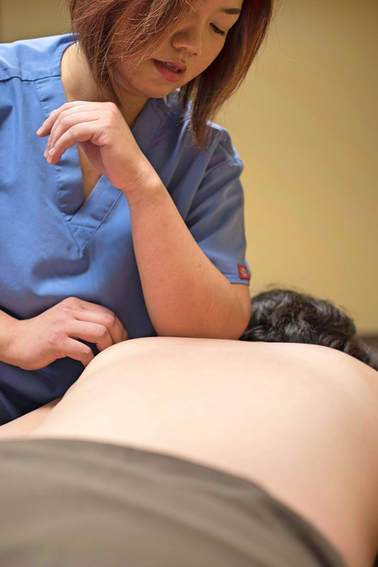
PictureMassage therapy can use very strong pressure and typically uses oil on the skin. Bowen does neither of these things.
Massage is normally done with the client undressed with oil on their skin to help the hands slide. Pressure is often quite strong, sometimes extremely so. The therapist works on the client paying especial attention to the “problem area” with little or no break for the whole session which will typically last an hour (anything from 30-90 minutes is normal). You will often feel an instant improvement which typically wears off gradually during the week.
 
What is Bowen Technique?
 
Bowen does not use the repeated movements, multiple techniques, extended heavy pressure and continuous work of massage, preferring a minimal range of techniques, mainly gentle movement of joints to prepare for a rolling movement called the “Bowen Move”. We always work the whole body, which can mean we don´t necessarily focus a lot of (or any!) time on the “problem area”.
​
In a session Bowen therapists make dramatically fewer moves than a massage therapist would incorporate signature breaks of several minutes in the treatment. These gaps are one of the essential elements of Bowen Technique.

It is possible to have your entire Bowen treatment while still clothed (in light, loose clothing). It is quite normal for you to feel little difference immediately after the treatment, with your body starting to change 2-3 days after the session and experience further reactions for up to a week after. Bowen can even make you feel slightly worse initially before you feel better. (The most common “bad reactions” are that people feel sore as though they had gone to the gym or they are very tired.)

 
Why would you choose either Bowen or Massage Therapy? 
 
Bowen can be done with you totally clothed (one layer only please!) and it uses no oil. If you are uncomfortable undressing or very allergic then Bowen may be a good solution for you. Bowen also has a lower "hands on" time  so if you are sensitive to touch it may be a better option than massage.

Bowen treatments are shorter than the standard massage session, with 15-20 minutes being the average hands on treatment time. This makes it a good choice if you have limited time, or (like me) don´t enjoy lying down for too long or dislike massage, but still have pain which you want help with.

If you want continuous physical contact or sustained strong pressure, then massage therapy is definitely going to be more appropriate for you. Some people enjoy the experience of a deep massage so that, while they use Bowen therapeutically for pain issues which don´t respond to anything else, their preference for maintenance would be a deep sports massage.

0 Comments

Bowen Technique for Sciatica and Restless Leg

10/31/2016

0 Comments


One of my Pilates colleagues, Sandra, came to me with a number of related issues: sciatic pain, numbness in her lower leg and foot, a pulling from her hip flexor into her back which would make it hard to get to sleep at night, restless leg syndrome and right ankle pain which was stopping her doing tango.

She responded surprisingly quickly to the first treatment and for four days afterwards her ankle pain, restless leg and the pain causing the sleep problem disappeared. She had a massage booked which she went to as it was more “relaxation” than therapy and she forgot the “don´t have any other treatments during your course of Bowen” warning. The day after this massage all her symptoms returned as bad as they had been. After the second treatment the numbness and hip/back pain got worse for 4 days and then on the 5th day the pain went.

After three treatments the numbness was significantly less, though she could still feel it, but the ankle pain, restless leg and hip-flexor/back pain had gone.

A year later, with perhaps one treatment in between, the ankle pain is a distant memory, and her restless leg and sciatic pain only bother her occasionally. There is still some residual pain in her back after exercise, but she doesn´t have any problem getting to sleep due to it. 

Picture
“The symptoms I came to James with seemed so disconnected, yet all equally annoying and uncomfortable. The restless leg was something I had learned to accept and almost didn't mention it to James as it runs in my family. One of my sisters, my mother and grandmother all suffer from it. And I thought it would never be solved.
 
I had tried other soft tissue therapies in the past, which seemed to help, but only for short periods. James started working on my back first and I was initially unsure as to how much this was going to help me, as it was so simple, soft and light.
 
Bowen provided me with an immediate sense of relaxation and pain relief: one day my back went into spasm at work and James did a move on my sacrum between clients, which to my great surprise released the pain instantly. Sometimes I would feel pain after the session, sometimes it would take a day to set in and other times there was no pain at all. In each case however after day 2-3 I would feel a real improvement or the pain was gone completely.
 
Definitely something I will seek to get done again if I needed it.”
0 Comments

How Might Bowen Work? Two Theories

10/31/2016

1 Comment

 
There is so much we don´t know about how the human body works: how is it that the immune system doesn´t see a fertilized egg as an alien intruder which needs to be killed off, but allows it to develop for 9 months? Why do we yawn? Why do we dream or sleep so much? (Giraffes sleep less than 4 hours a day and wild elephants only 2) Why do we blush? We have theories, but we don´t know the answers to any of these questions with any degree of certainty.
 
Likewise, when we get down to detail, we don´t know how many medical interventions work. We also don´t really know how Bowen works. Here are two of the best current theories we have.
The Structural Theory: Bowen Influences Myofascial Tensegrity

The first theory about how Bowen works is to do with the terrifyingly named “(myo)fascial tensegrity”.

Fascia is your connective tissue, which wraps everything from the outer layer of bone (the periosteum), the organs, muscles (the “myo” part of myofascia), blood vessels, nerves, spinal cord and is most readily accessible as part of the skin (superficial fascia). Tensegrity structures get the tensional integrity of their structure from the cables that join the solid parts, rather than a “wall” structure where one brick is layed on top of another.

When applied to bodies we talk about “bio tensegrity” and the idea is that, like a tent, it is the relationship of tension in different parts of the structure which holds it together. The theory would be (in simple terms) that by altering tension in one area of the fascia we can change the tensegrity relationships and therefore create relief from pain and better posture.

Fascia is incredibly strong and tough and in Bowen we only touch the body for a very short time and in a very gentle way. How can the minimal work that Bowen uses make any difference to the fascia?

Certainly not in a crudely mechanical sense, both because there is simply nowhere near enough pressure on the fascia (not enough weight and not enough time) to create any change, and because in tensegrity another part has to take up the slack when one part is released, and a purely mechanical understanding of Bowen offers no explanation of how that would work.

​Understanding Bowen as a structural therapy is helpful and probably true, but it´s not enough.
The Information Theory: Bowen Influences the Nervous System

​We need a supplementary theory, and we have one: Bowen hacks into the information technology of our body (the nervous system) and gets the body to restore “factory settings”. If Bowen accesses the nervous system, specifically the interaction between the central and autonomic nervous systems, that could explain how so little work can change things – the changes don´t happen from the Bowen, but as a result of the body´s reaction to the Bowen.

If the body reboots its understanding of its relationship to the outside world (exteroception) and its own internal landscape (proprioception) this would account too for changes in the overall tensegrity – it is not a mechanical “release”, but the nervous system instructing your muscles to behave differently (would explain how such soft moves can make such a big change).

There are other things which may suggest that the nervous system is involved: it is quite normal to get responses in parts of the body that have not been directly worked on and the changes in the body often take 3-4 days to start to register in the body. A nervous system involvement would also explain why the “no other treatments” rule is there: any other input within a week or so of the Bowen would muddy the signal that the nervous system was responding to.
Picture
The structure of a suspension bridge holds together through tensegrity
Theory Should Not Get in the Way of Practice

It is helpful to have some sort of story about what is happening as a result of a treatment. Both these theories make sense, and both have a good chance of being (at least partially) correct.

Of course they are not the only perspectives on what is going on: a number of the bowen techniques work directly to encourage lymphatic movement, and most of the standard locations where we make moves are on acupuncture points and meridians, so it might also be possible to explain what´s happening on the basis of Chinese medical theory.

Most people come to Bowen (often as a last resort) as they are in pain and want the pain to stop. Ultimately, regardless of all the theory, if you don´t try Bowen it won´t work for you. ​
1 Comment

Bowen for Back and Neck Pain and Numbness in the Hip

10/5/2016

0 Comments

 
Celina is a professional dancer and French tutor and so she has a lifestyle which mixes athleticism with being stuck in London traffic as she drives to clients. She came to me with three main issues: it was painful for her to turn her head more than about 45 degrees to the left, and driving for more than about 30 minutes made her mid back hurt and her right hip go numb.

After the first treatment there was a little improvement, with the time it took to start hurting increasing to about 40 mins. This was enough to get her to most of her clients without the pain kicking off. By the third week she was up above an hour before the pain started and she could also turn her head without pain (though it was still restricted).

A few months later, after a few more treatments, all of the problems she came with had completely stopped bothering her.
Picture
Picture
​
​“For years I´ve had a recurring inflammation of the facet joints in my spine, and the problem travelled up into my shoulders and neck, and down to affect my hip alignment, which both restricted me in my professional life and caused me a lot of discomfort.

I´ve tried treatment from a number of different techniques and practices, and I must say I was bewildered by the change that such a minimalistic and non-invasive technique could bring about in my body. The fact that the manipulations were there to invite my own body to correct itself and not to force any parts to move involuntarily was a welcome change.
​

Since Bowen, not only have I been able to work without discomfort or pain, but it has also given me a deeper sense of understanding and connection to my own physical body. What more can you ask for?!”
0 Comments
Forward>>

    Author

    Body Kinetics Therapy currently offers Sharon Wheeler's Fascial Work for physical trauma and Bowen Technique for neuromuscular pain in Old Street EC1, Shepherd's Bush, W6 and Finsbury Park, London N4.  

    Picture
    Dr James Palmer
    Book a Session

    Archives

    September 2022
    June 2021
    December 2019
    November 2019
    October 2019
    July 2019
    June 2019
    May 2019
    April 2019
    November 2018
    March 2018
    February 2018
    December 2017
    November 2017
    April 2017
    October 2016

    Categories

    All

    RSS Feed

    Picture
    About
    James Palmer
    What I Do
    What to Expect
    What People Think
    ​
    ​​Sessions 
    North London Clinic
    Shepherd's Bush Clinic
    ​
    Contact
Website design: InterKnowledge. Original photography: Beth Evans. Logo design: Josh Olins. Copyright © Body Kinetics Therapy 2018. Privacy and Data Protection. Legal. 

  • Home
  • About
  • Clinics
    • Hammersmith & Fulham W6
    • Hackney E5
  • Training
  • Contact